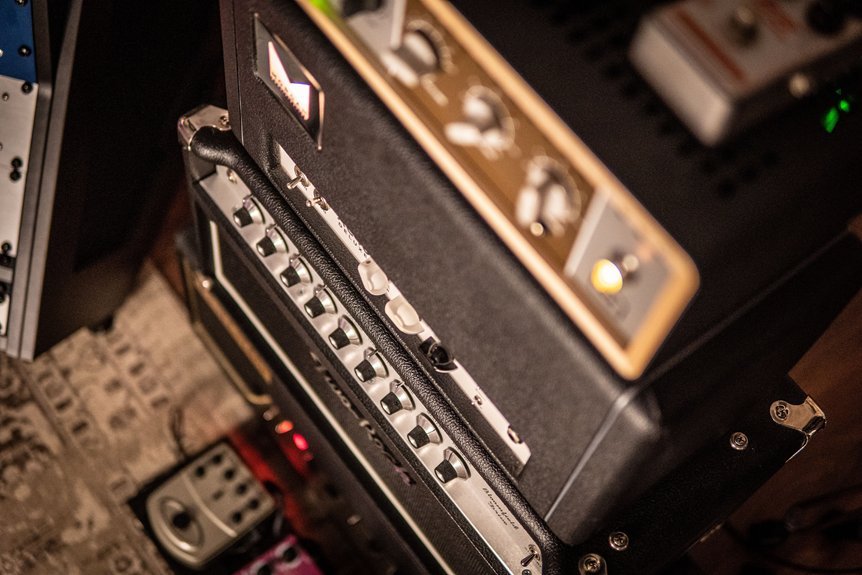
A comprehensive guide to clean amps examines how headroom, fidelity, and predictability define tone across tube, solid-state, and modeling designs. It contrasts touch sensitivity, bias stability, and transient control with solid-state consistency and tight headroom, while modeling aims for transparent digital replication. Key Fender- and Marshall-style clean voices are mapped to practical buying, setup, and long-term maintenance. The discussion exposes unified gain staging and effects interaction, leaving the path to pristine cleans intriguingly unresolved for those pursuing exacting nuance.
What Makes a Clean-Sounding Amp?
A clean-sounding guitar amp delivers minimal harmonic distortion and maintains a pure, unaltered waveform when operated within its designed headroom. It emphasizes clean headroom, linear response, and controlled transient handling. Pedal interaction remains predictable at reduced gain, enabling external effects to shape tone without coloration from the amp. The focus lies on fidelity, headroom margins, and system-wide dynamic integrity.
Tube, Solid-State, and Modeling: Which Keeps Your Tone Transparent?
Tube, Solid-State, and Modeling: Which Keeps Your Tone Transparent? This discussion compares core architectures for clean tone: tube design emphasizes harmonic touch and dynamic headroom, yet requires bias stability. Solid state balance offers predictable headroom and tight response, minimizing variability. Modeling attempts to replicate transparency digitally. Each approach preserves purity differently, guiding players toward personal freedom in reliability, feel, and architectural preference.
Top Clean Amp Models for Fender- and Marshall-Style Tones
Clean-amp modeling for Fender- and Marshall-style tones focuses on capturing the classic low-to-mid gain headroom and balanced frequency response characteristic of each lineage. Top models emphasize clean headroom at practical headroom ranges, preserving note articulation. They track guitar dynamics precisely, offering responsive transient behavior, dynamic EQ shaping, and artifact-free cleans suitable for expressive rhythm and clean lead playing without compression artifacts.
Practical Buying, Setup, and Maintenance Tips for Pristine Cleans
Practical buying, setup, and maintenance considerations for pristine cleans focus on maximizing headroom consistency, signal fidelity, and long-term reliability. The guide emphasizes practical maintenance routines, careful component selection, and disciplined calibration. A pristine setup favors transparent gain staging and interference control. Coherent phrasing with consistent patching reduces noise, while routine checks sustain headroom, adaptability, and tonal integrity across varying playing dynamics.
Frequently Asked Questions
How Do I Avoid Fizz at High Gain Settings on Cleans?
To avoid fizz at high gain, use proper pedal dynamics and clarity control; adjust preamp, compressor, and EQ to preserve pristine clears while keeping headroom. Avoid fizz by balancing gain staging, guitar tone, and amp voicing.
Can a Pedalboard Affect Your Clean Tone Integrity?
A notable 42% of players report audible changes from pedalboard setups, indicating real impact on results. Pedalboard impact can alter dynamics and impedance, affecting clean tone integrity; careful buffer use, cable quality, and consistent true-bypass practices preserve clarity and freedom.
Do Room Acoustics Influence Perceived Amp Cleans?
Yes, room acoustics influence perceived amp cleans by altering reflections and tonal balance; amp construction determines intrinsic response to those interactions, shaping how clean headroom and harmonic content are experienced in a given space.
Are Tube Swap Brands Audible for Clean Headroom?
Yes; tube swaps can affect clean headroom perception due to bias point and harmonic content changes. Imagery: quiet valleys widen as tubes shift, revealing headroom differences. Tube swaps influence headroom perception, with subtle tonal shifts noted by discerning technicians.
Is Pedal Dynamics Chaining Crucial for Pristine Cleans?
Pedal dynamics are crucial for pristine cleans, shaping headroom and response; without disciplined control, even minor variations muddy clarity. The approach favors precise pick attack, sustain, and level matching to preserve transparent, uncolored clean tones with freedom.
Conclusion
In pursuit of pristine cleans, tone emerges as a delicate equilibrium of headroom, fidelity, and predictability. Tube amps bend transient edges with a subtle glow; solid-state preserves tight, arithmetic accuracy; modeling seeks transparent digital fidelity. Across Fender- and Marshall-style voices, the clean voice is a measured compromise, not a miracle. With disciplined gain staging, careful biasing, and thoughtful effects integration, one can cultivate an uninterrupted sonic horizon—where harmonics breathe and every note lands with clinical clarity and musical intent.