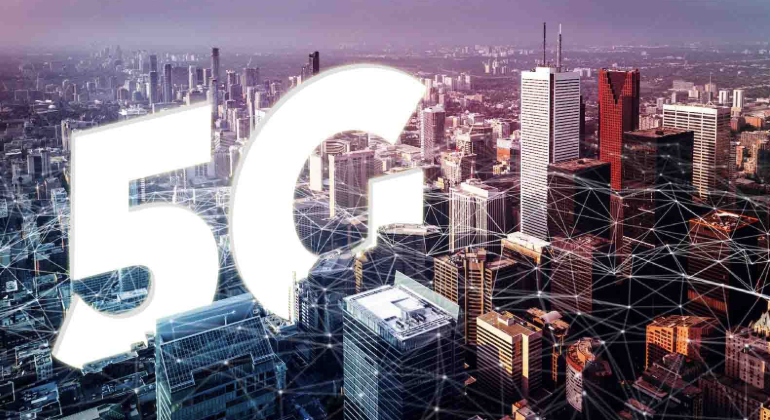
The advent of 5G technology marks a significant milestone in the evolution of the Internet of Things (IoT). Its low latency and enhanced bandwidth provide the foundation for seamless device communication and real-time data transfer. This opens new avenues for operational efficiency across diverse sectors. However, the integration of 5G also presents challenges, particularly concerning security and infrastructure. Understanding these dynamics is crucial for grasping the full impact of 5G on IoT growth.
The Advantages of 5G for IoT Connectivity
As the demand for interconnected devices surges, the advantages of 5G technology for IoT connectivity become increasingly evident.
With its low latency and enhanced bandwidth, 5G facilitates instantaneous data transfer, empowering devices to communicate seamlessly. This allows for real-time monitoring and control, enhancing operational efficiency and user experience.
Ultimately, 5G paves the way for a more liberated and interconnected digital landscape.
Transformative Applications of 5G in Various Sectors
While many industries are still adapting to the digital age, the transformative applications of 5G technology are setting new standards across various sectors.
In smart cities, enhanced connectivity facilitates real-time data sharing, improving urban planning and resource management.
Similarly, industrial automation benefits from 5G’s low latency, enabling seamless communication between machines, which optimizes production processes and enhances operational efficiency.
Overcoming Challenges: Security and Infrastructure
The rapid advancements in 5G technology and its applications bring to light significant challenges related to security and infrastructure.
Ensuring robust security protocols is essential to protect the vast data transmitted across networks.
Additionally, substantial infrastructure investments are required to support the increased connectivity demands of IoT devices.
Addressing these challenges is crucial for realizing the full potential of 5G-enabled IoT growth.
See also: Green Technology and Sustainable Innovation
The Future of Iot: Predictions and Trends With 5G
Predictions for the future of the Internet of Things (IoT) with the integration of 5G technology suggest a transformative shift in connectivity and device capabilities.
As edge computing becomes prevalent, smart cities will emerge, enhancing urban life through efficient resource management and improved services.
This convergence of technologies will empower individuals, fostering innovation and creating vast opportunities for societal advancement and personal freedom.
Conclusion
In conclusion, 5G technology serves as the backbone of IoT growth, ushering in a new era of connectivity akin to the roots of a tree spreading wide and deep, supporting myriad branches of innovation. Its low latency and high bandwidth empower industries to thrive through real-time data transfer and automation. As challenges like security and infrastructure are addressed, the potential for transformative applications expands, promising a future where the digital and physical worlds seamlessly intertwine.